
How We Find Winners

Inside the Turf Talk approach to trends, ratings, race profiling and value

The Turf Talk Method

At Turf Talk, we do not rely on guesswork, hype or scattergun tipping.

Our approach is built around a ratings system that goes back more than 30 years and has been refined through decades of studying race trends, form, trainer patterns, race conditions and market behaviour.

The aim is not to find a horse that merely looks likely to run well. The aim is to identify the right horse for the shape of the race, and then decide whether the price represents value.

That means looking beyond the obvious and building a complete profile for every runner.

In some races, especially major handicaps and festivals, that process starts with the historical trends. In others, the ratings, current form and race setup carry more weight. The strength of Turf Talk is not in using one factor. It is in combining the right ones in the right races.
1. Trends

  • Historic winner profiles
  • Age and weight patterns
  • Recency and experience
  • Race-specific filters
  • Used to identify the right type

Trends are the foundation in many of the major races we cover. They help establish the kind of horse that usually wins and quickly rule out runners with the wrong profile.

But trends are only the beginning. They are there to identify the type, not to make the final betting decision on their own.

2. Ratings

  • Built over 30+ years
  • Blends multiple factors
  • Highlights overall profile strength
  • Separates contenders from pretenders
  • Protects against one-angle thinking

The Turf Talk Ratings take the strongest trend fits and then score them more deeply using current form, race conditions and profile strength.

This is where the real edge comes from. A horse might not tick every traditional trend box, but if the overall racing shape is right, the ratings can still flag it as a major contender.

3. Value

  • Price matters
  • Not just who is most likely
  • Big races often mispriced
  • Market shape always considered
  • Long-term thinking essential

The final stage is value. A horse can be the most likely winner in the race and still be a poor bet if the odds are too short. Equally, a runner can be slightly less obvious but still make far more appeal if the price is bigger than its true chance.

That is what we are always looking for: the best betting opportunity, not just the most fashionable horse.

What Goes Into The Ratings

We never reduce a race to one number or one angle.

The ratings are built by weighing up a range of factors, depending on the race type. These can include:

  • historical trends and winner profiles
  • recent form and finishing positions
  • official ratings, speed figures and performance ratings
  • trainer form and jockey form
  • going, distance and course suitability
  • stamina and race shape
  • experience, jumping reliability and profile strength
  • headgear, equipment and seasonal patterns
  • market position and value

Some races demand a strong trends-first approach. Others need more emphasis on class, pace, conditions or overall race shape. The skill is in applying the right balance, not following a rigid one-size-fits-all system.

Turf Talk Ratings for The Grand National 2026

** Turf Talk Ratings published for the 2026 Grand National

Why The Biggest Races Need More Than One View

Festival handicaps and staying chases are rarely solved by basic form alone.

That is why races like the Grand National, the Topham, the Scottish National and the major festival handicaps suit the Turf Talk approach so well. They reward horses with the right overall profile, not just the most recent flashy run.

That profile might include:

  • the right age and weight band
  • proven stamina or evidence the trip will suit
  • enough experience without being overexposed
  • the right recent prep run
  • trainer and jockey coming here in decent order

It is this layered approach that gives the ratings their strength in the races that matter most.

What We Do Not Do

There are a lot of racing sites that promise daily winners, chase volume or try to impress with endless selections.

That is not the Turf Talk way.

We do not:

  • tip for the sake of filling a page
  • force daily selections when the value is not there
  • pretend every race can be solved the same way
  • make unrealistic promises

Our approach is selective for a reason. We would rather back the right horse in the right race at the right price than throw out five or six bets just to look busy.

The Grand National Example

The 2026 Grand National was the perfect example of why the full Turf Talk Ratings matter.

The traditional eliminator highlighted several runners with outstanding trend profiles, but I Am Maximus came out clear on the Turf Talk Ratings because the wider picture was right:

  • proven stamina
  • class and substance for the race
  • major jockey angle
  • overall profile suited to the demands of the National

That matters because racing is not just about ticking every box. It is about building the strongest possible profile from the evidence available.

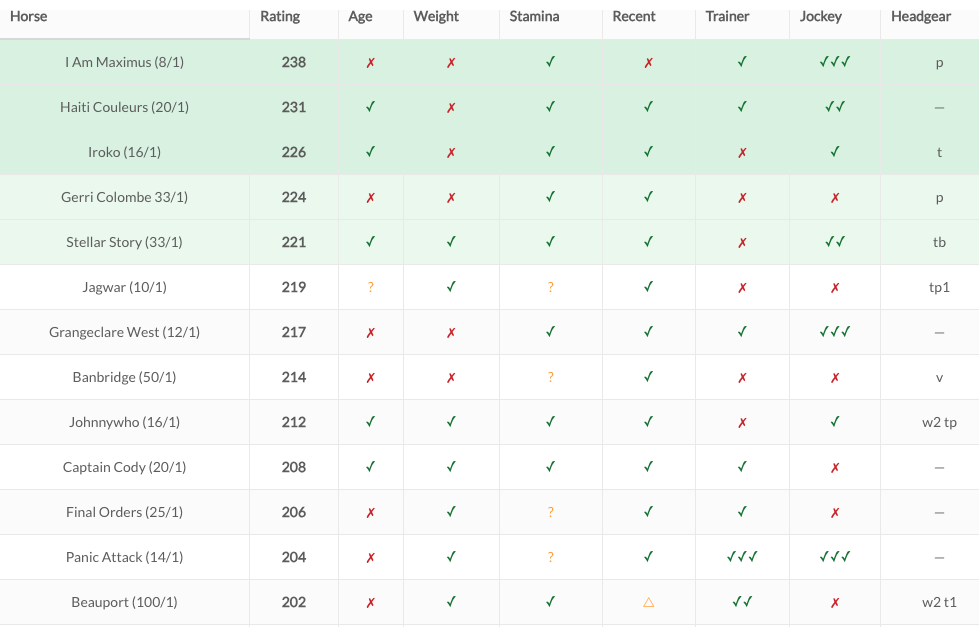
The ratings identified the winner in the biggest race of them all, and that has helped shape how we will present the model going forward. We ran everything again using the new system with everything included in one ratings formula and this was the result:

Horse Rating Age Weight Stamina Recent Trainer Jockey Headgear
I Am Maximus 238 ✓✓ ✓✓✓ ✓✓ ✓✓
Iroko 228 ✓✓✓ ✓✓ ✓✓ ✓✓
Jagwar 219 ✓✓✓ ✓✓✓ ? ✓✓✓
Grangeclare West 216 ✓✓ ✓✓ ✓✓ n/a
Gerri Colombe 214 ✓✓ ✓✓ ✓✓ ✓✓
Johnnywho 211 ✓✓✓ ✓✓✓ ✓✓✓
Banbridge 209 ✓✓ ✓✓
Panic Attack 203 ✓✓ ✓✓✓ ✓✓✓ ✓✓✓ ✓✓✓ n/a

Trends Identify The Type. Ratings Identify The Winner