
How We Use Sire Data

Breeding can tell you far more than most punters realise, especially when horses are still unexposed or tackling new conditions

What Sire Data Can Tell You

Sire data is one of the most useful supporting tools in racing analysis, especially when the exposed form does not yet tell the full story.

At Turf Talk, we use breeding information to help answer key questions such as:

  • Will this horse stay the trip?
  • Will it handle softer or faster ground?
  • Is it likely to improve with age or distance?
  • Does the pedigree suggest a stronger performance under these conditions?

This is particularly valuable with younger horses, lightly raced types and runners trying something new.

While breeding is never used in isolation, it can often provide an important clue where the visible form leaves uncertainty.
1. Stamina Clues

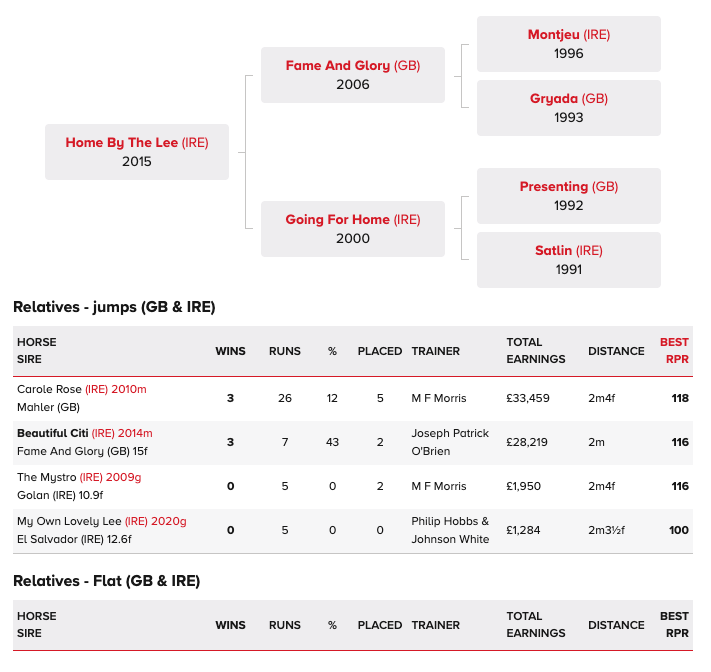
One of the biggest uses of sire data is working out whether a horse is likely to stay further.

A runner stepping up in trip may not have proven the distance yet, but if the breeding strongly points towards stamina, that is an important positive.

This can be especially helpful in staying handicaps, novice races and unexposed chasers.

2. Ground Suitability

Some sires consistently produce stock that act particularly well on soft ground, fast ground or artificial surfaces.

That can help us judge whether a horse is likely to improve or regress when conditions change.

In races where the ground is a major variable, this can be a very useful supporting factor.

3. Unexposed Types

Breeding matters most when the horse has not yet shown us everything on the track.

With lightly raced horses, juveniles, maidens or runners changing code, sire data can offer clues that the bare form simply cannot.

This is where pedigree can add depth to the overall profile.

When Sire Data Matters Most

At Turf Talk, sire data tends to carry more weight in:

  • Flat races involving younger or less exposed horses
  • runners stepping up significantly in trip
  • horses encountering new ground conditions
  • maidens, novices and early-career profiles
  • races where visible form is thin or open to interpretation

In these races, pedigree can help fill in the gaps.

It can highlight horses likely to improve for a new test and can also warn against runners whose profile may be less suitable than the market assumes.

When It Matters Less

Sire data is not equally important in every race.

If a horse is fully exposed, has run many times under similar conditions and already has a clear profile, breeding becomes less influential than proven evidence on the track.

That is why sire data is treated as a supporting angle, not a shortcut.

The Turf Talk approach is always to balance pedigree with:

  • recent form
  • race conditions
  • trainer and jockey form
  • pace and race shape
  • overall profile strength

Used properly, sire data adds depth. Used badly, it can become a distraction.

How It Fits Into The Turf Talk Ratings

Sire data is one part of the wider Turf Talk Ratings picture.

It is never used on its own to force a selection, but it can strengthen or weaken a horse’s overall profile when there are genuine questions to answer.

For example, it can help support a case where:

  • a horse looks ready for a longer trip
  • the ground may unlock improvement
  • the market is underestimating future potential
  • the race conditions look more suitable than recent bare form suggests

This is exactly why it remains part of the model. It helps uncover horses that may be better suited than the market realises.

What Sire Data Is Not

Sire data is not:

  • a replacement for form
  • a reason to ignore race conditions
  • something that overrides stronger evidence
  • a magic shortcut to picking winners

It is one of many pieces of the puzzle, and it works best when used in the right type of race and in the right way.

Why We Still Use It

The market does not always price in hidden potential properly.

That is why sire data still matters.

When used alongside the other core Turf Talk factors, it helps us build a more informed view of the horse and the race.

And in the right circumstances, that can be the difference between seeing a horse as merely interesting and recognising it as a genuine betting opportunity.

Form Shows What A Horse Has Done. Breeding Can Hint At What It Is About To Do