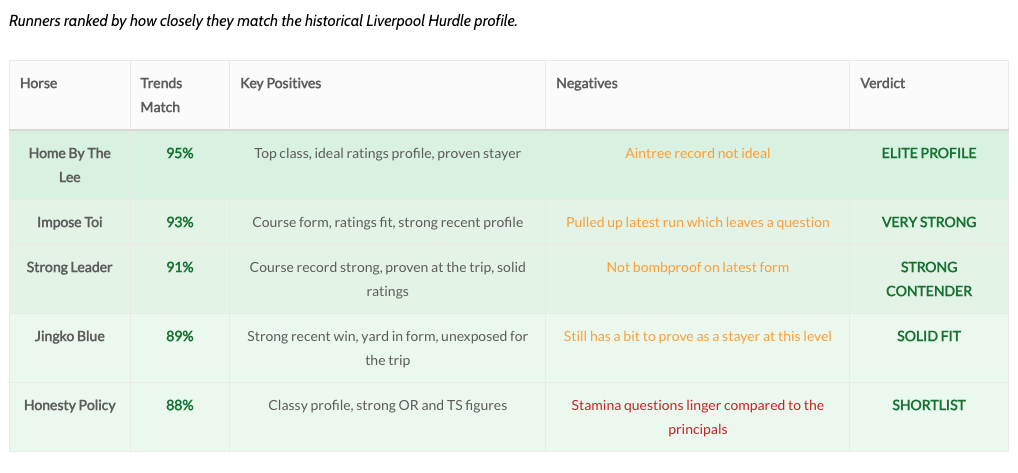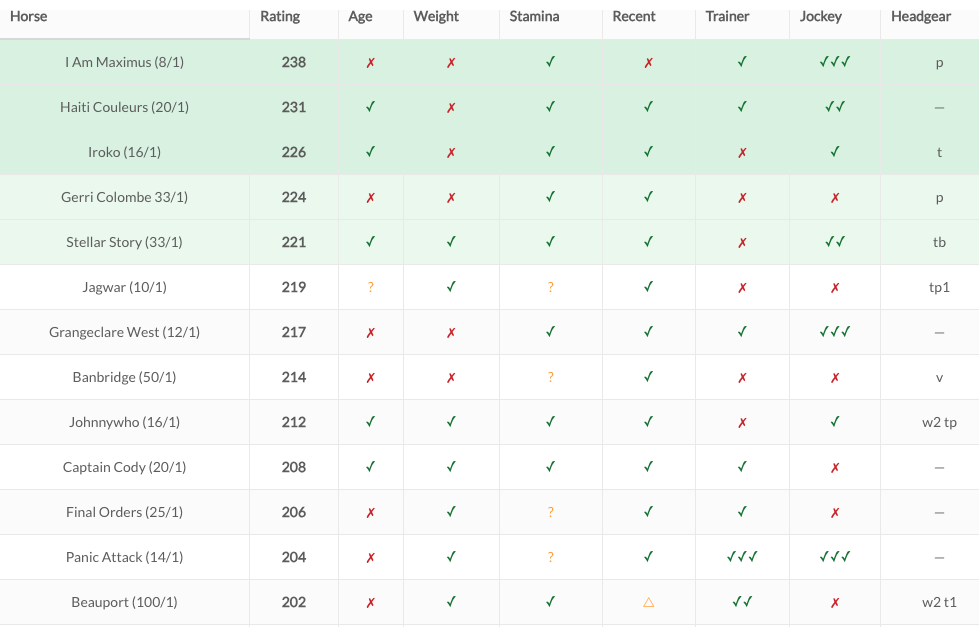

How We Use Trends

Why historical race patterns still matter and how Turf Talk uses them the right way

Right Type

  • Age profile
  • Weight profile
  • Experience profile
  • Recent run pattern
  • Race suitability

The first job of trends is to identify the right type of horse for the race.

Before we even think about betting value, we want to know whether a runner fits the usual winning mould. In some races that matters hugely, especially in staying handicaps and big festival contests.

Remove Weaknesses

  • Wrong age band
  • Questionable stamina
  • Poor prep profile
  • Weak recent figures
  • Too many negatives

Trends are also useful for ruling out runners that may be popular in the market but look wrong on the evidence.

A horse can be classy, fashionable or trained by a big yard, but if the profile does not fit the race, that is something we want to know early.

Build A Shortlist

  • Focus on the strongest fits
  • Reduce the field quickly
  • Highlight likely contenders
  • Prepare for ratings stage
  • Keep the process disciplined

Once the wrong types are removed, trends help us form a stronger shortlist.

That shortlist then goes into the full Turf Talk ratings process, where we bring in the wider factors that decide which contenders are the best betting opportunities.

How Turf Talk Uses Trends Differently

A lot of racing content uses trends badly. That usually means one of two things:

  • throwing together a long list of statistics with no real purpose
  • using trends so rigidly that good horses get wrongly ignored

At Turf Talk, we try to avoid both mistakes.

We use trends as a guide, not as a cage. They help us understand the race and narrow the field, but the final decision comes from the full picture.

That full picture includes:

  • trainer and jockey form
  • going and track suitability
  • stamina and race shape
  • speed figures and performance ratings
  • how well treated a horse may be
  • whether the market has overreacted or missed something

This matters because racing is not run on spreadsheets alone. The numbers point the way, but the best analysis comes from understanding what those numbers mean in context.

Where Trends Are Most Useful

Trends are especially powerful in races where history tends to repeat itself.

That often includes:

These are races where the demands are very specific and not every runner is built for them, no matter how strong the basic form may look.

Where Trends Matter Less

There are also races where trends should be treated more carefully.

For example:

  • small tactical fields
  • maidens with several unknown quantities
  • races full of lightly raced improvers
  • sprints where draw and pace dominate

In those situations, we still respect race patterns, but we place more emphasis on current ability, pace setup, conditions and market value than on long historical checklists.

The Key Point

Trends do not pick winners on their own.

What they do is make the race easier to read.

They help identify the right type of horse, expose the wrong type, and create a stronger shortlist. From there, the Turf Talk ratings take over and the focus shifts to profile strength, race conditions and value.

That is why trends remain such an important part of our process, but never the whole story.

Trends Narrow The Field. Ratings Tell Us What To Back