

How We Use Going and Conditions

Why the ground matters, how conditions shape a race, and why the right horse on the wrong surface is still the wrong bet

Why Going Matters So Much

Going is one of the most important factors in horse racing analysis.

A horse can have the right class, the right jockey, the right trainer and still run well below expectations if the ground is wrong. Some horses travel beautifully on good ground but lose their action when the surface turns soft. Others improve dramatically when there is cut in the ground and the emphasis shifts towards stamina rather than speed.

At Turf Talk, we treat going and race conditions as a key part of the overall ratings picture, not an afterthought.

That does not just mean looking at whether a horse has won on soft or good ground before. It means understanding how the conditions of a race are likely to affect:

  • pace
  • stamina demands
  • jumping rhythm
  • track position
  • the suitability of individual running styles

In short, the ground does not just change how fast the race is run. It changes what kind of horse is most likely to win it.
What We Look For

  • Past form on the expected going
  • Whether the horse’s action suggests it will handle conditions
  • How the ground changes the stamina test
  • Whether the track and weather will suit the runner
  • How conditions affect the shape of the race

What We Avoid

  • Blindly trusting one past win on similar ground
  • Ignoring how much the race conditions have changed
  • Assuming all soft ground or all good ground rides the same
  • Overlooking pace and stamina implications
  • Backing a horse whose profile clearly points elsewhere

How Turf Talk Uses It

  • As a core part of the ratings, not a minor note
  • To strengthen or weaken the overall case for a runner
  • To reassess the race if weather changes arrive late
  • To judge whether the conditions increase the value angle
  • To help identify when the market may be misreading the race

Going Is More Than Just Soft Or Good

One of the biggest mistakes punters make is treating going as too simple.

A race might be officially described as good to soft, but that does not tell the full story on its own. Some tracks dry quickly. Some hold water. Some become attritional when rain arrives, while others still ride fair and quick enough underneath.

The same applies to good ground. One track’s good ground can ride lively and favour speed. Another can ride more demanding and suit strong stayers.

That is why we do not just look at the official description. We also think about:

  • the course itself
  • the weather in the days leading up to the race
  • whether rain or drying conditions may change the test
  • how the race is likely to be run under those conditions

Sometimes the market reacts too slowly to a ground change. Other times it overreacts. Either way, that can create value if you assess the conditions properly.

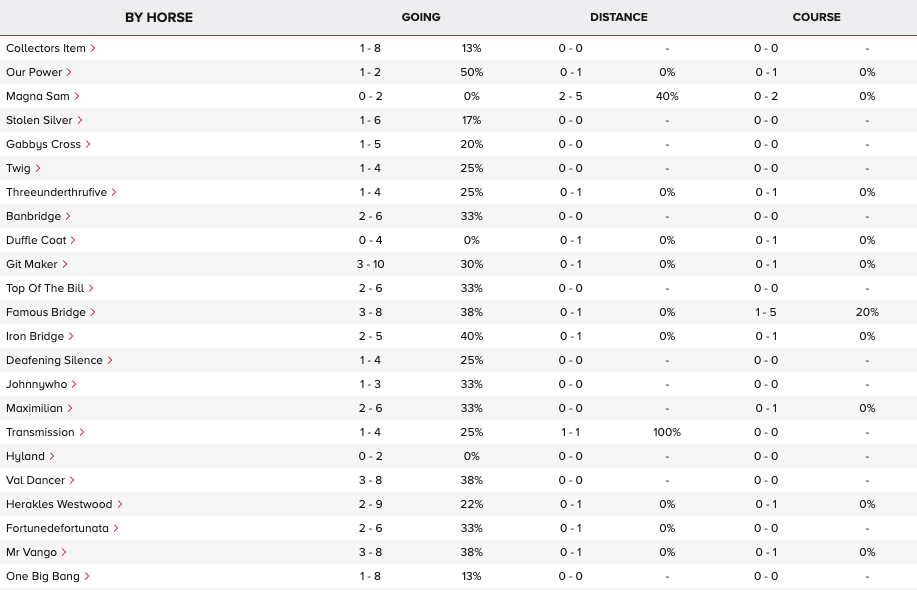
Going Stats

When Conditions Become Crucial

Going and conditions become especially important when:

  • the weather changes close to race time
  • the field includes horses with very clear ground preferences
  • the trip is already testing and softer ground adds extra stamina demands
  • jumping becomes more difficult under slower or tackier conditions
  • a strongly run race is likely to expose doubtful stayers

In those races, the ground can completely reshape the pecking order.

When We Treat It More Cautiously

We stay a little more cautious with the going angle when:

  • the horse has only limited evidence on a surface
  • the official going may not reflect how the track will actually ride
  • the horse’s class edge looks strong enough to overcome a slight concern
  • there is mixed evidence rather than a clear ground preference

In those cases, conditions still matter, but they are weighed alongside the wider profile rather than used as a hard rule on their own.

The Turf Talk View

Going and conditions are a major part of the Turf Talk ratings model because they influence not just whether a horse can handle the race, but how the race is likely to unfold.

We want to know:

  • which horses are helped by the ground
  • which horses may be inconvenienced by it
  • whether the race becomes more of a stamina test or more of a speed test
  • whether the market has priced those changes correctly

A horse that looks strong on paper can become opposable if conditions turn against it. Equally, a horse overlooked in the betting can become very interesting if the ground shifts in its favour.

That is why going is never just a box to tick.

It is one of the factors that helps turn form into a proper race view.

At Turf Talk, it is not used in isolation, but it is always taken seriously. The best bets are usually found when the horse, the race shape and the conditions all line up together.

A Horse Can Have The Right Form And Still Be Wrong For The Conditions